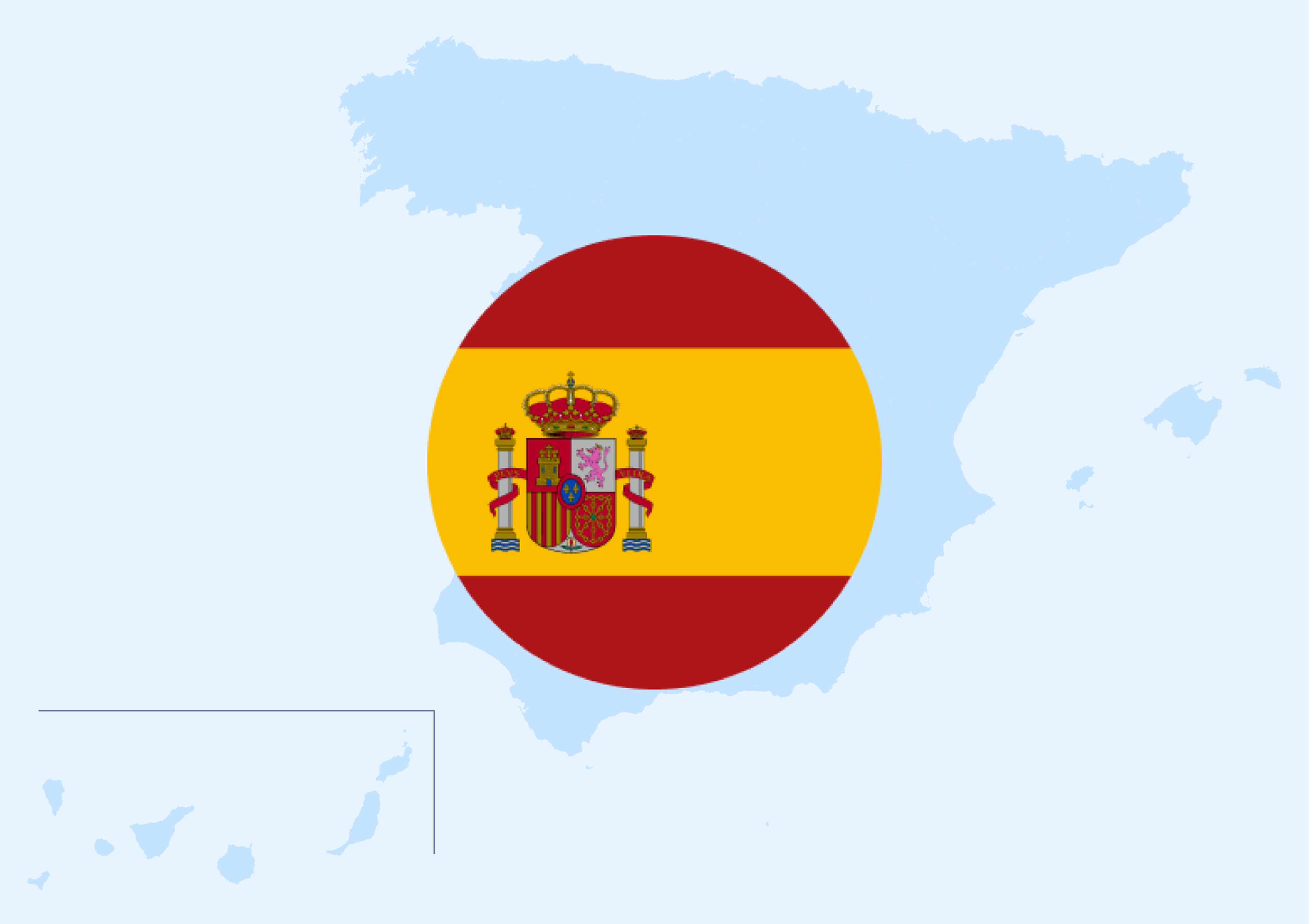
Spain is currently experiencing strong momentum in intellectual services, driven by the growth of its technological hubs and the arrival of many foreign talents. This movement offers concrete opportunities to strengthen IT, data and engineering capabilities, while relying on a market undergoing full evolution.
A market in transition, backed by solid fundamentals
Spain now holds a strategic position in the European landscape of intellectual services. The country continues to demonstrate its ability to attract new talent, secure international investment, and host an increasing number of large-scale technology projects. These developments are creating favorable conditions for the emergence of new collaboration models.
Recent economic trends reinforce this trajectory. Spain has recorded one of the strongest growth rates in the eurozone, averaging around 2.8% annually over the past two years. This upward dynamic naturally increases demand for external expertise and accelerates the adoption of more flexible, more equipped, and more innovation-driven collaboration models.
The market is evolving fast. Needs are increasing, talent is diversifying, and companies are seeking more agile models to support their growth.
Growing technological hubs, drivers of competitiveness
With ICT employment growing close to 10% per year, Spain is positioning itself as one of Europe’s most important digital talent pools.
Madrid and Barcelona play a central role in this momentum:
Madrid has established itself as a major digital hub in southern Europe, attracting massive investments in data centers and becoming the sixth largest European market in capacity.
Barcelona is also strengthening its position, supported by an international entrepreneurial ecosystem and rising investment in R&D.
By combining geographical proximity to major European markets, alignment in time zone, competitive costs and talents accustomed to international environments, Spain is solidifying its role in the technological strategies of large organizations.
A market historically dominated by consulting companies, now gradually evolving
Consulting companies have long played a structuring role in Spain’s intellectual services. They remain a trusted partner for managing IT projects, securing key skills, and ensuring operational continuity, especially in sectors such as banking, insurance, energy and telecommunications.
However, the model is changing. As needs diversify and transformation projects multiply, companies are beginning to combine traditional partners with independent experts and digital platforms. The market is gradually shifting toward more hybrid and more flexible approaches.
Companies remain attached to their trusted partners, but they also want to broaden their access to talent. The market is becoming more hybrid and more open, creating new opportunities across the entire ecosystem.
A growing freelance market, supported by international attractiveness
Spain has around 3.2 million freelancers, representing nearly 16% of the active population. Freelancing is expanding in technical and digital fields, boosted by the arrival of international talents, who account for more than 96% of newly registered freelancers since 2021.
In intellectual services, this trend appears in several ways:
a steady increase in freelancing in IT, data, design and transformation roles;
a strong preference among talent for consulting firms-based arrangements, which offer practical advantages and a sense of contractual security;
significant differences in daily rates between France and Spain, which encourage some French freelancers to accept assignments in Madrid or Barcelona at lower rates than in France while maintaining a good quality of life.
In practice, a freelancer billing around €900 in France may accept around €600 for an equivalent assignment in Spain, particularly in Madrid or Barcelona, where quality of life and international exposure weigh heavily in the decision. This flexibility reinforces the market’s attractiveness for European clients.
Purchasing practices consolidating, with a growing need for clarity
Large Spanish organizations are strengthening control over their supplier panels, gaining clearer visibility on their spending and improving the efficiency of their engagement processes. In a highly operational market where business teams retain a central role, procurement priorities are now centered around three criteria: cost, time, and expertise. This search for balance is pushing companies toward collaboration models that are more agile and easier to manage.
In this context, time to fill becomes critical. Procurement teams seek to reduce engagement timelines, standardize contractual frameworks, and limit panel fragmentation. This dynamic is accelerating the adoption of more structured and transparent sourcing models, aligned with the efficiency expected in the Spanish market.
A complementary hub in the European landscape
Spain naturally integrates into European sourcing and delivery strategies. It does not replace any other ecosystem, but provides an additional and credible option for diversifying access to expertise.
Compared with other ecosystems in the region:
Portugal is emerging as a highly innovative hub, attracting multinationals for reasons of cost and flexibility, despite a slight time difference.
Italy remains more expensive for certain profiles but offers strong expertise in fields such as luxury, industry and design.
Morocco and Tunisia offer an attractive combination of geographical proximity, strong French and English proficiency, and highly competitive costs.
Central and Eastern Europe (Poland, Romania, etc.) continues to expand its role as a nearshore IT hub.
Spain positions itself between these models, combining technological strength, international attractiveness and seamless collaboration with Western Europe. This combination makes it a strategic hub to diversify intellectual services without increasing organizational complexity.
A market accelerating and becoming more structured
The Spanish market is rapidly gaining maturity. The combination of technological investments, diverse talent and more structured procurement practices is reinforcing its importance in European projects. Organizations that anticipate this evolution by adapting their sourcing models will gain a meaningful advantage in an increasingly demanding environment.
If you wish to explore new sourcing opportunities or structure your intellectual services in Spain, our local team is available to support you with agile, transparent and tailored collaboration models.