For a long time, time to contract was perceived as an administrative indicator, loosely monitored by procurement and legal departments, rarely discussed at the business level… This interpretation is no longer sustainable. In a context where companies rely heavily on professional services to execute their projects, contracting speed has become a performance factor in its own right.
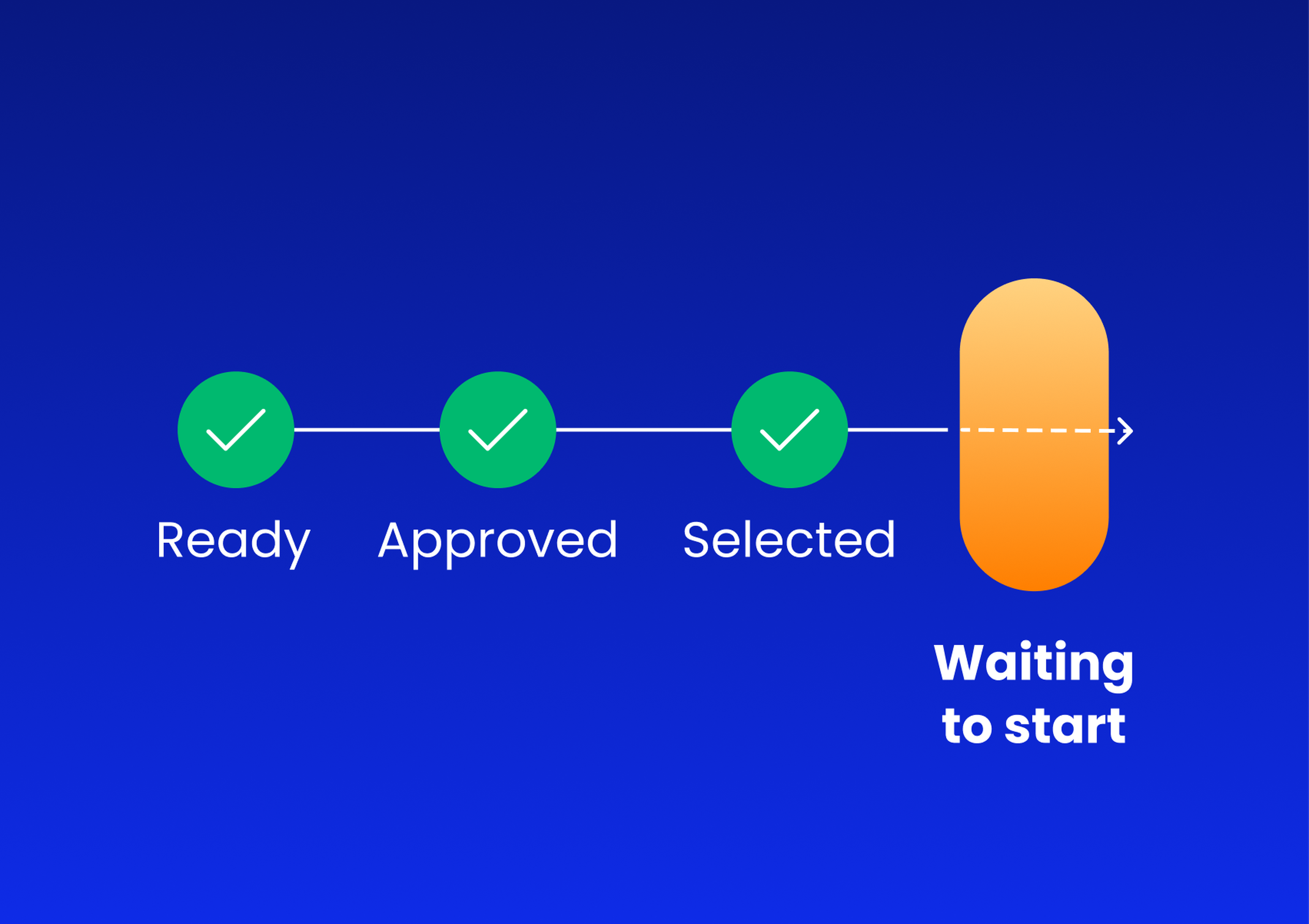
The observation is widely shared in the field. Projects are not delayed during execution, but even before they start. The need is identified, the provider selected, the assignment scoped… then the waiting begins. Timelines extend, time to contract becomes a major point of friction, and operational pressure increases. Accelerating contracting has become a direct lever of operational performance and competitiveness, far beyond legal considerations.
Time to contract is no longer a simple operational indicator
Reducing time to contract to a legal delay is a common mistake. What it truly measures is an organization’s ability to transform a business need into execution. Behind this delay lie issues of alignment between procurement, legal, and business teams, clarity of responsibilities, process maturity, and the ability to absorb volume.
In many organizations, time to contract was long tolerated as long as projects “eventually started.” But at scale, this tolerance comes at a cost. Every week lost before launching an assignment is a week during which value is not produced, internal teams compensate, and trade-offs become unfavorable. Time to contract then becomes a leading signal of organizational dysfunction, far more than a simple compliance KPI.
This reality is particularly visible in environments where professional services are structuring: IT, data, transformation, cybersecurity, engineering, or consulting. In these contexts, the speed of mobilizing expertise directly determines the ability to deliver.
This issue goes far beyond the question of signature timing alone. It is part of broader large-scale professional services contract management challenges, where the ability to absorb volume without rigidifying execution becomes a key performance factor.
When high time to contract becomes a competitive barrier
The impacts of high time to contract are often underestimated because they materialize before execution. On the business side, they result in projects delayed before launch, opportunities deferred or abandoned, and growing frustration with timelines perceived as non-negotiable.
On the procurement side, the situation is just as critical. Teams devote disproportionate time to low individual-value contracts, to the detriment of more structuring topics. Under pressure, exceptions multiply. Gradually, parallel circuits are put in place, faster but less traceable. And it is precisely in these gray areas that risk increases.
In this context, time to contract slows execution to the point of becoming a leading indicator of loss of control, pushing the organization to operate outside its own framework. Concretely, this often translates into assignments launched “while waiting for the contract,” commitments made before full validation, or providers mobilized without a clear framework. In the short term, the project moves forward. In the medium term, risk accumulates.
Why contractual speed has become a competitive advantage
In organizations highly dependent on professional services, contracting speed directly determines the ability to produce value.
At scale, delays accumulate and create a lasting gap between decided strategy and actual execution.
Conversely, organizations capable of contracting quickly mobilize key expertise faster, secure their timelines, and reduce operational pressure on business teams. Time to contract then becomes a differentiating factor, just like sourcing capability or provider management quality.
In this context, speed becomes the result of a contractual framework designed to absorb volume, differentiate situations, and enable execution without workarounds.
The real issue is not the signature
At this stage, one thing becomes clear: the difference is not made at the moment of signature.
Organizations that sustainably reduce their time to contract do not go “faster” at the end of the process: they design upstream contractual frameworks capable of absorbing volume, differentiating situations, and enabling execution without bypassing controls.
In other words, speed is the direct consequence of a system designed for execution rather than an isolated objective.
Accelerating time to contract without increasing risk
In practice, moving faster does not mean taking more risk. The key is not to remove controls, but to reposition and adapt them to real use cases, creating true coherence across the entire framework.
The most mature organizations rely on a combination of structuring levers:
Segment contracts according to their level of risk rather than their amount alone
Standardize contractual frameworks for recurring cases to avoid repetitive reviews
Clarify roles and validation thresholds to limit unnecessary back-and-forth
Position controls as early as possible in the contracting journey
In this model, time to contract is reduced through smoother orchestration of the contractual flow. Speed becomes a natural consequence of a framework designed to absorb volume without creating friction.
Moving from contract control to time to contract management
Sustainably reducing time to contract requires a change in posture: shifting from a logic of contract control to a logic of managing the delay before execution. It is no longer about reviewing each contract afterward, but about designing a framework that enables fast execution under secure conditions.
This logic relies on contractual models adapted to use cases, validation paths understandable by business teams, explicit rules, and robust traceability. Teams gain autonomy without stepping outside the framework. Procurement refocuses on steering and consistency. Legal concentrates on truly sensitive matters. Time to contract decreases mechanically because the system is designed to enable speed.
Within this framework, certain mechanisms make it possible to go further in well-identified cases, when speed becomes critical and the contractual framework must be immediately mobilizable.
When umbrella contracting concretely reduces time to contract
In certain contexts, particularly when needs are urgent, recurring, or low in individual value, reducing time to contract no longer relies solely on optimizing internal processes. It requires the existence of a contractual framework already validated and immediately mobilizable, without an additional negotiation or validation phase.
It is precisely in these situations that umbrella contracting takes on its full meaning. By relying on a pre-existing, compliant, and secure contractual model, companies can quickly engage professional services without recreating, for each assignment, the entire contracting process. The framework is already in place, controls have been anticipated, and execution can start without friction.
Umbrella contracting does not replace contract management. It is an operational extension of it, designed to absorb volume and urgency while maintaining a high level of risk control.
To explore this lever further in high-volume contexts, discover how umbrella contracting accelerates professional services contracting while maintaining a secure contractual framework.
Conclusion
Time to contract is no longer an operational irritant. It has become a competitiveness factor for organizations that rely heavily on professional services.
The most high-performing companies design contractual frameworks capable of differentiating risks and enabling execution without workarounds. In this context, models such as commercial intermediation provide a concrete response to situations where speed becomes critical, without compromising compliance and risk control requirements.