A data prototype can produce a convincing result in two weeks and remain unusable two years later. It is almost never a modelling problem. It is a problem of data, ownership and operations.
Moving a data proof of concept into production requires reliable architecture, controlled data, appropriate security and a team accountable for daily operation. Those four conditions are rarely in place when the demonstration convinces the executive committee, and that is exactly where the gap opens.
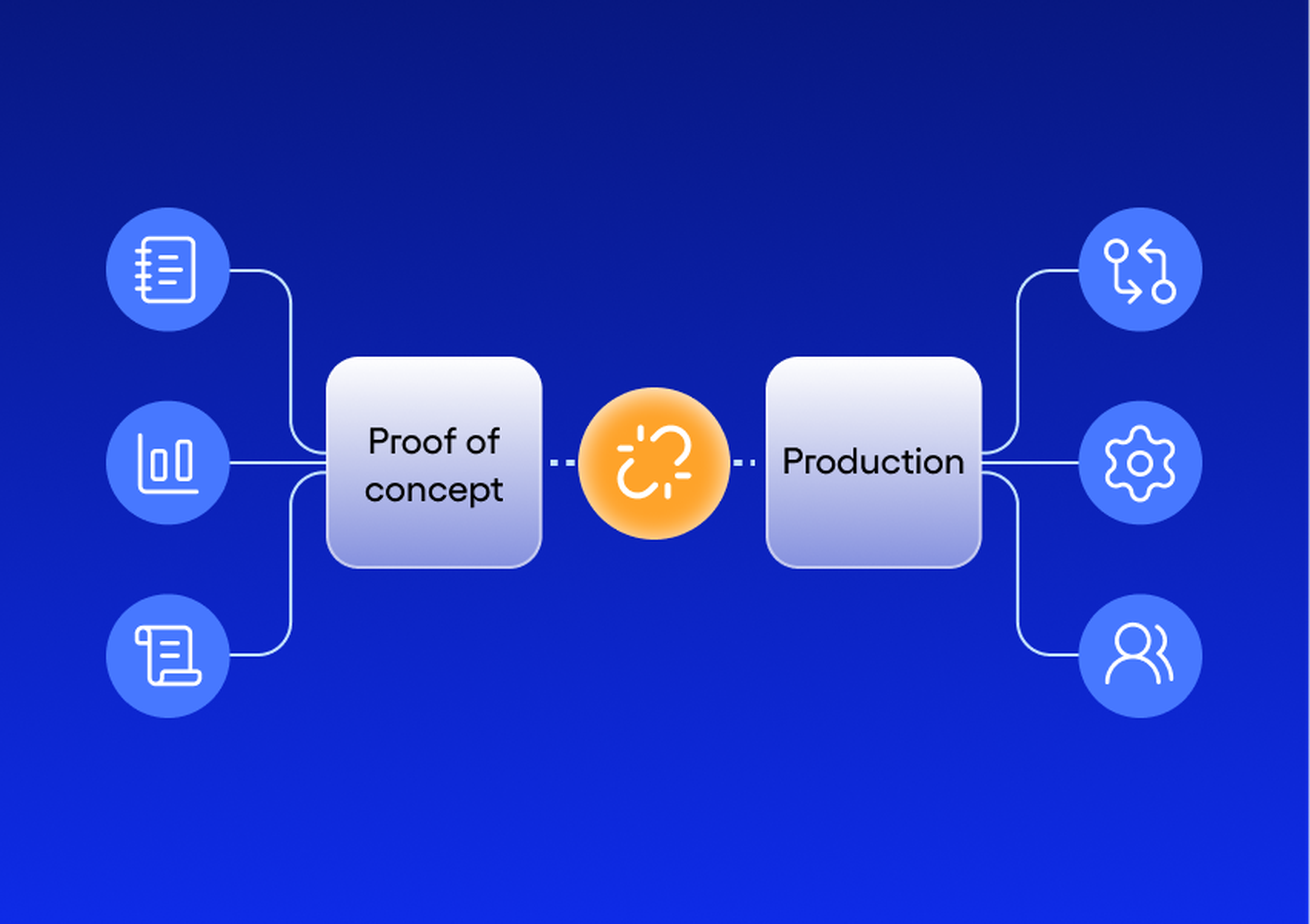
What separates a proof of concept from a production service
A proof of concept verifies that an idea can work on a limited scope. It optimizes one variable: the demonstration. A production service has to meet requirements a prototype is entitled to ignore.
| Dimension | Expected in a proof of concept | Expected in production |
|---|---|---|
Data | An extract is enough, often cleaned by hand | Automated pipelines, measured quality, reconstructable history |
Availability | None | Defined service level, monitoring, possible on-call |
Security | Broad access granted to the project | Named permissions, traceability, periodic review |
Cost | Not tracked | Tracked budget, alerting, usage trade-offs |
Documentation | Optional | Required for handover and audit |
Ownership | The project team | A named service owner |
A model that works in a notebook is not yet a usable application. The question is not whether it works, but who runs it on a Monday morning six months from now.
The most common blockers
Blockers surface at the same moment almost every time: when the team discovers too late that the data is incomplete, that access is undocumented, or that nobody owns the service after launch.
• The data does not exist at the required frequency. The prototype used a monthly export; the service needs a daily feed nobody has built.
• Quality was compensated manually. Hand corrections made during the prototype are neither documented nor automatable.
• Security arrives last. Access, encryption and data location requirements emerge during architecture review, once the build is largely done.
• No service owner. The sponsor approved a result, not an operational commitment.
• The real cost appears at cutover. The prototype ran a few hours a week; the service runs continuously.
The NIST AI Risk Management Framework emphasizes governance, risk measurement and system monitoring. For the software around the model, the NIST Secure Software Development Framework provides useful secure development practices. Both converge on one point: risk is addressed during design, not after go-live.
Key takeaways
-A successful proof of concept proves an idea is plausible, not that a service is operable.
-Five blockers recur: data freshness, manually compensated quality, late security, no owner, running cost.
-The decisive question is not technical: who operates the service in six months?
Which skills are needed
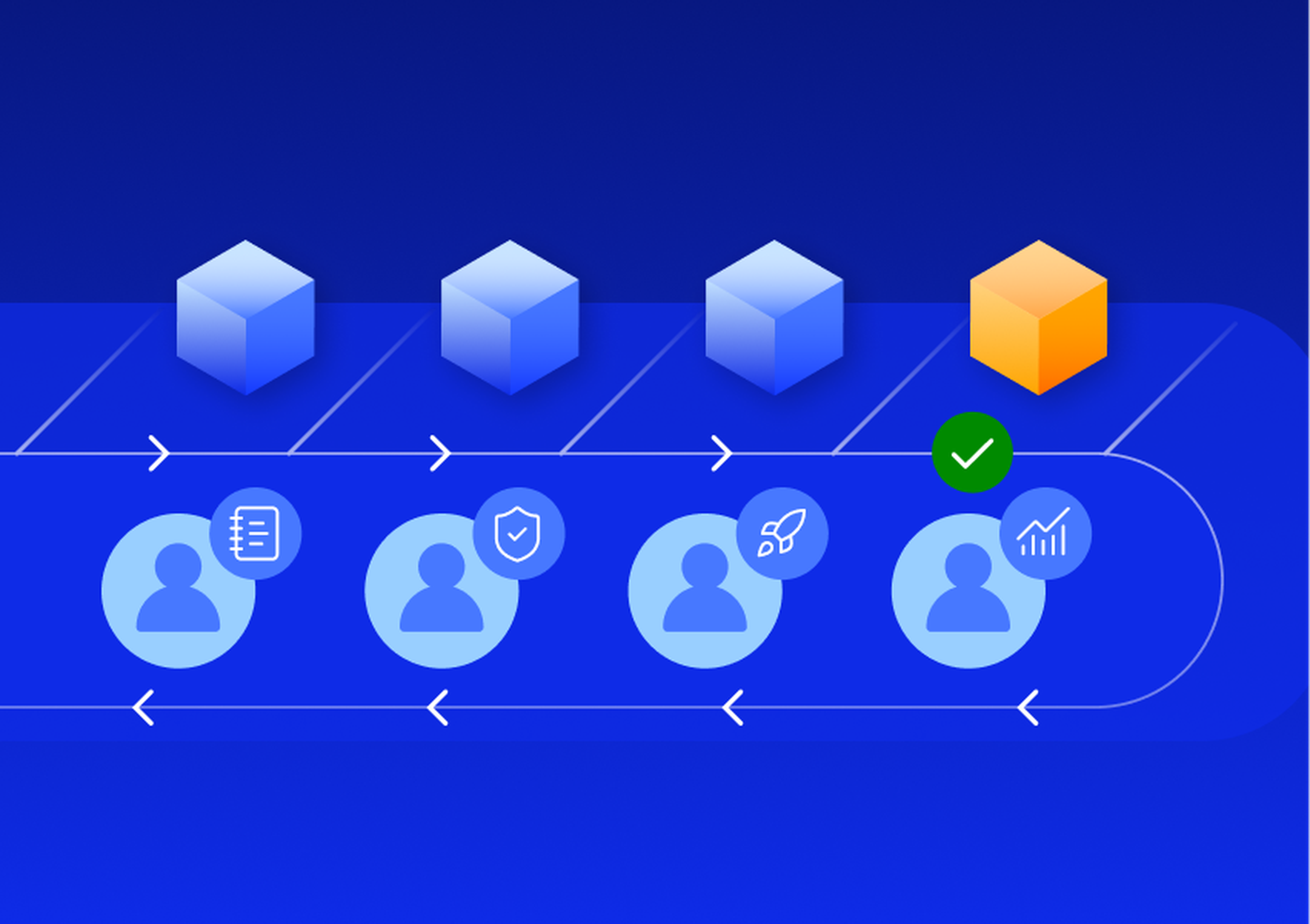
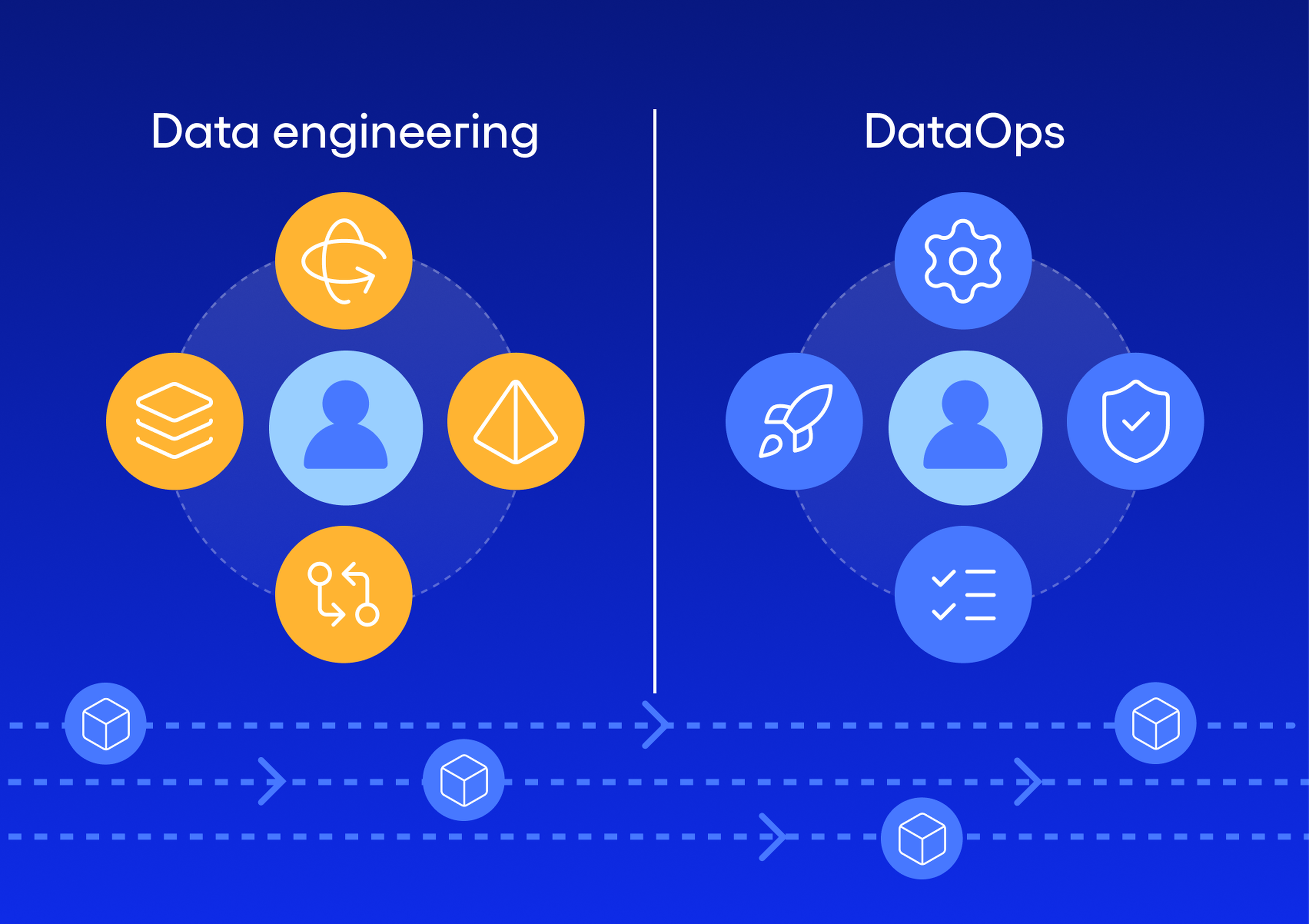
Moving to production usually requires four distinct skill sets, rarely held by one person.
| Role | Contribution to production readiness |
|---|---|
Data engineer | Pipelines, feed reliability, data tests, orchestration |
ML engineer or software engineer | Turning the model into a callable service, packaging, performance |
MLOps profile | Deployment, versioning, monitoring, retraining, rollback |
Business owner | Adoption, definition of the expected result, usage trade-offs |
Security, governance, legal | Access, personal data, retention, compliance, depending on sensitivity |
An external expert can contribute a diagnosis, an architecture or an industrialization phase. Operational accountability has to stay internal: it is the only guarantee the service survives the consultant’s departure.
How to structure the move to production
Start with a production readiness review. Its purpose is to decide whether the prototype can be hardened or must be rebuilt, before committing the production budget.
Nine points to check:
1. Data sources, refresh frequency and actual availability
2. Named access rights and traceability of queries
3. Quality measured on critical fields, with alert thresholds
4. Automated tests on data and on code
5. Monitoring, logging and alerting
6. Running cost estimated at target usage
7. Stop criteria, rollback procedure and fallback plan
8. Operations and architecture documentation
9. Service owner and committed service level
Then define the service owner, the deliverables, the service levels and the handover plan. In an RFP, ask candidates to separate three lots explicitly: remediation work, deployment, and post-launch support. A proposal that merges them is impossible to compare and gets renegotiated mid-project.
Mistakes to avoid
Approving a proof of concept on the strength of its demonstration. A strong demo creates an expectation of operation that nothing in the prototype guarantees. Always present the result alongside the remaining gap.
Confusing a model with a service. The model is a component. The service includes authentication, logging, error handling, recovery, monitoring and documentation.
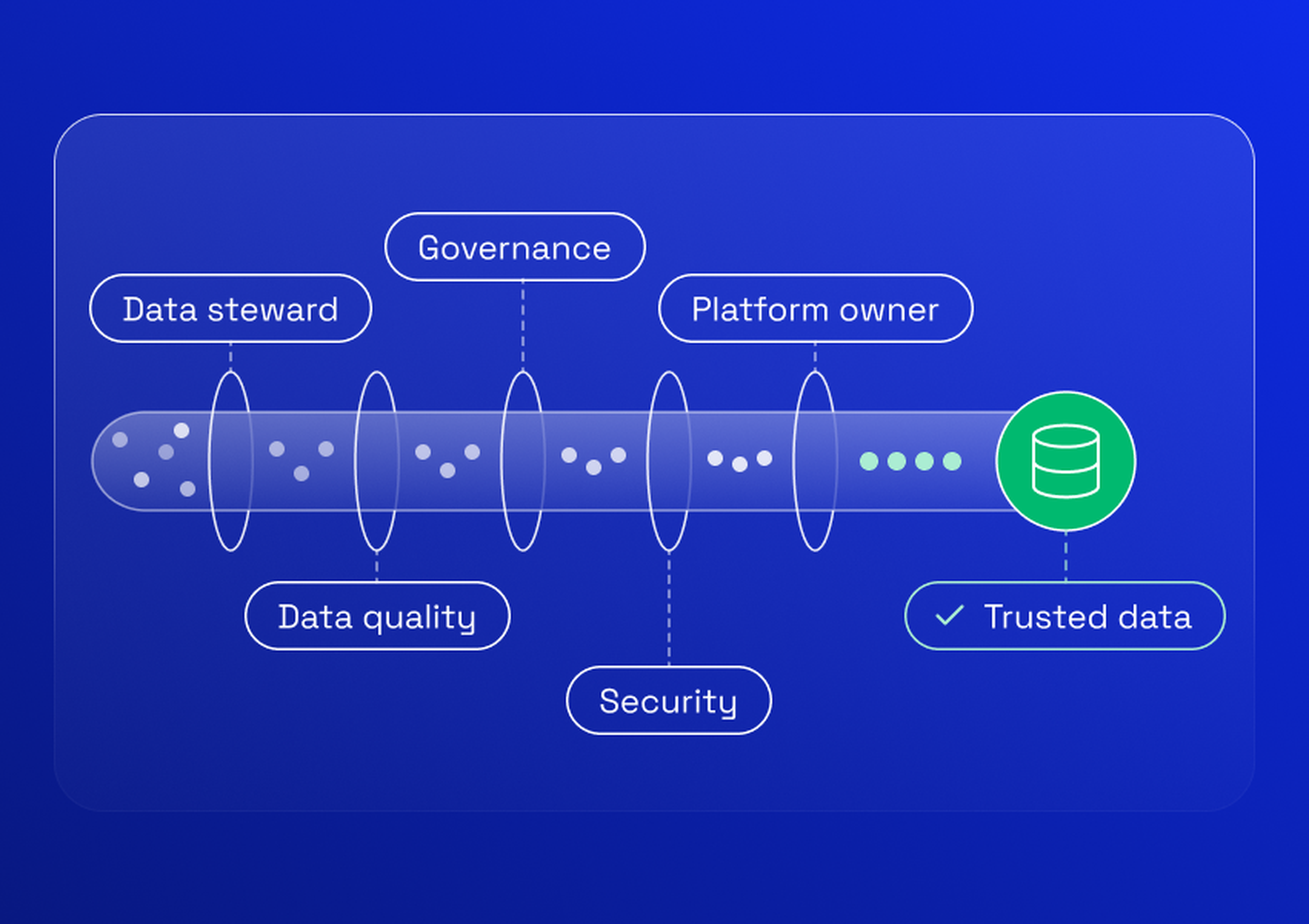
Deferring data governance. If the prototype used data nobody owns, production will raise the question at the worst possible moment.
Treating monitoring as optional. Without supervision of input data and performance, silent drift can degrade a service for months before anyone notices.
Key takeaways
-The production readiness review comes before the budget commitment, not after.
-Split the RFP into three lots: remediation, deployment, support.
-Unmonitored drift degrades a service more reliably than an outage, because it triggers no alert.
Conclusion
Moving from proof of concept to production is as much an organizational question as a technical one. Defining accountability, quality requirements and missing skills before launch is what turns a demonstration into a durable service.
The sequence that works is stable: audit the prototype, run a readiness review, split into lots, name the owner, document the handover.