A CFO leaves the company in the middle of the year-end closing process. An IT function needs to be reorganised halfway through a migration. An industrial site starts to fall behind. None of these situations leaves time for a conventional recruitment process, and that is precisely where interim management comes in: entrusting a leadership role to an experienced senior executive for a limited period and with a clearly defined objective.
What is interim management?
Quick answer: interim management involves appointing an experienced external executive to take on a leadership role or critical project for a limited period. Unlike a consultant, an interim manager makes operational decisions and is accountable for the results. The assignment has a specific objective, a start date and an end date, and concludes with a handover.
France Transition, the industry’s professional federation, describes it as a way for a company to access highly qualified operational management expertise at short notice and for a defined period, in order to deal with specific situations. The key word is “operational”: an interim manager does not advise the leadership team from the sidelines. They become part of it for the duration of the assignment.
The model is well established in France. The latest Xerfi study commissioned by France Transition, published in 2024, estimated the market’s value at €800 million in 2023, with average annual growth of more than 16% since 2019. Interim cover, which ensures continuity when a position is vacant, is among the most frequently requested types of assignment.
The role of an interim manager in practice
In this video, Stanislas discusses the practical role of an interim manager: quickly understanding the key challenges, getting to grips with the issues, supporting the teams, leading projects and preparing for what comes next. His assignment is featured in our LittleBig Story.
When does a large organisation bring in an interim manager?
These situations share three characteristics: a significant challenge, a short timeframe and the absence of the right person internally. In a large organisation, five situations arise particularly often:
A vacant position: an unexpected departure, a long-term absence or a recruitment process that is taking too long for a senior leadership role.
Transformation: redesigning an organisation, information system or operating model.
Turnaround: quickly stabilising a struggling entity or site.
Post-acquisition integration: bringing together two teams, two cultures and two systems.
A critical project without a leader: a strategic programme launched without an available person to lead it.
For an HR Director, replacing the individual is only part of the issue. A leadership position left vacant for several months means delayed decisions, teams without clear direction and, in some cases, a wave of departures. An interim manager covers this period and prepares for the arrival of the person who will take over the role.
Interim manager, consultant or permanent hire: comparing the options
These three options address different needs. A consultant analyses the situation and makes recommendations, but implementation remains the company’s responsibility. A permanent hire provides stability, but involves several months of searching and a long-term commitment. An interim manager sits between the two: they implement, make decisions and are accountable for results over a defined period.
| Interim manager | Consultant | Permanent hire | |
|---|---|---|---|
Role | Leads and makes decisions within the organisation | Analyses and makes recommendations | Holds the role on a long-term basis |
Time to start | A few days to a few weeks | Quick | Several months |
Duration | Fixed-term assignment | Variable, linked to deliverables | Open-ended |
Success criteria | Delivery of the agreed objectives | Quality of the recommendations | Long-term performance in the role |
Best suited when | An urgent situation or transformation needs to be led | A diagnosis is required | The role is stable and clearly defined |
The different approaches are often combined. An interim manager can fill the role while the recruitment process progresses, then support the arrival of their successor.
The five stages of an interim management assignment
Whatever the context, an assignment generally follows a similar path. It begins before the manager arrives and ends after they leave.
1. Define the framework
The first few weeks are used to understand the situation, meet the teams and agree on objectives with the assignment sponsor, meaning the senior executive who commissions the assignment and makes the key decisions.
2. Build the plan
The manager translates the objectives into a roadmap covering priorities, organisational adjustments and recruitment for key roles. The plan is agreed with the sponsor before it is implemented.
3. Lead and measure
The manager monitors projects, the budget and the indicators defined at the outset, making adjustments as soon as the reality on the ground begins to diverge from the plan.
4. Prepare the handover
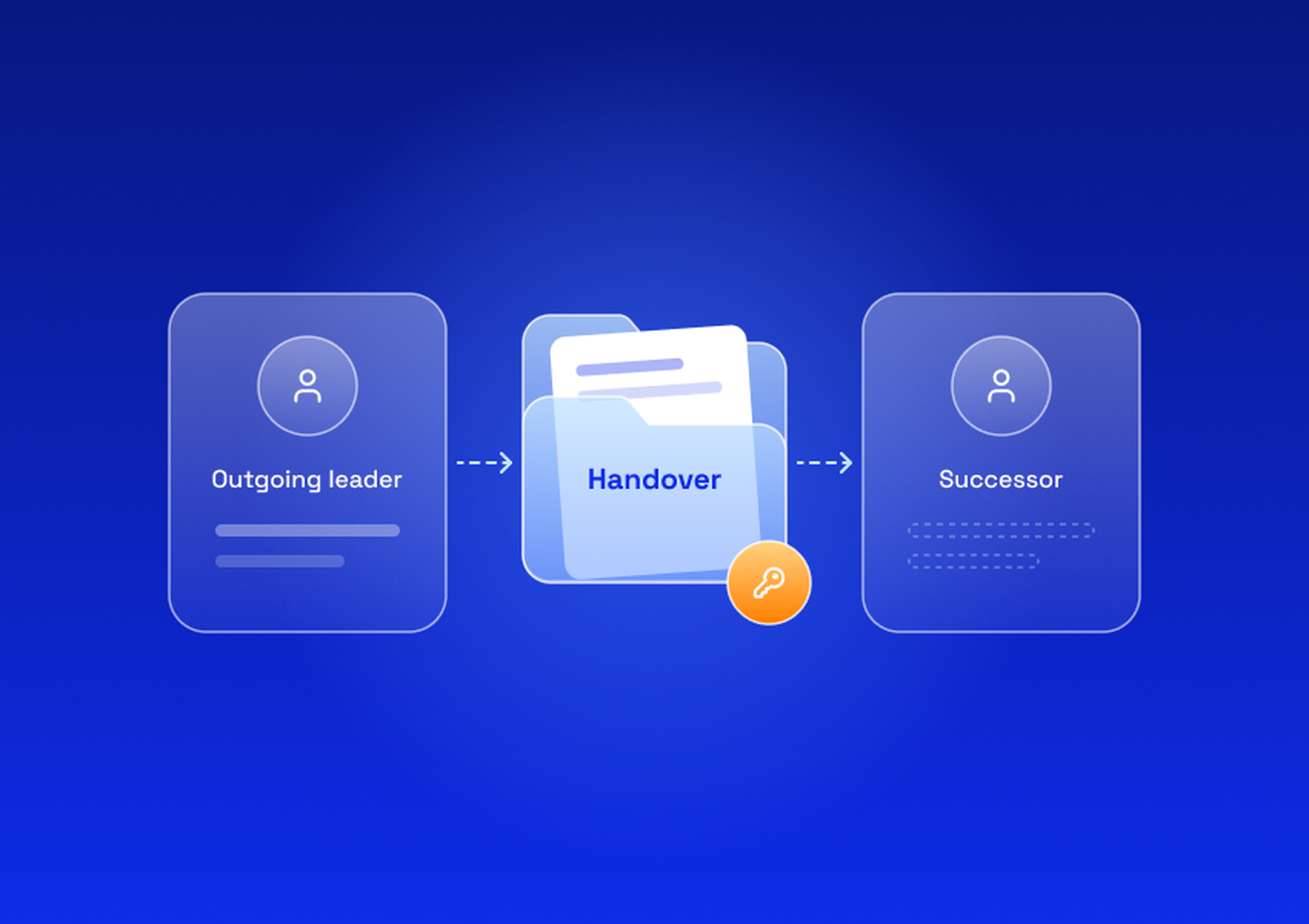
From the middle of the assignment onwards, the manager prepares for their departure by documenting key information, developing the teams’ skills and identifying the person who will take over the role.
5. Close the assignment
The final review compares the results with the initial objectives. The handover to the successor then brings the assignment to a close.
What interim management cannot solve
The model has its limits, and understanding them helps avoid disappointment. An interim manager cannot replace a decision that the leadership team is unwilling to make. If they are brought in to “stabilise” a team when the real question concerns that team’s future, they will spend the assignment treating the symptoms rather than addressing the underlying issue.
Interim management cannot compensate for the absence of a sponsor either. Without a senior leader who makes decisions, supports the assignment and protects it when dealing with other departments, even an excellent interim manager can become worn down by internal negotiations.
Finally, an interim manager does not replace a succession plan. They cover a defined period and prepare for the next stage, but the decision about what happens afterwards, whether to recruit, promote internally or restructure the role, remains with the company.
A well-designed assignment therefore rests on three clear answers: what problem needs to be solved, who owns the assignment and what happens afterwards. These questions are best addressed before a crisis arises, as argued in our perspective on how large organisations use interim managers.