A turnkey IT project promises one thing that buyers value highly: a single party responsible for delivering a finished result. That promise is also where the risks begin, because the more you hand over, the more you depend on the contract. This guide explains what turnkey means in IT, where it works and what to check before you sign.
What a turnkey IT project means
A turnkey IT project is a project in which one provider is responsible for the complete delivery, from design and development to testing, deployment and handover, and gives the client a working result. The client defines the need and accepts the outcome, while the provider manages how it is built.
The word comes from the idea of handing over a finished product that only needs to be switched on. In IT, that image is a little optimistic. Software always needs configuration, data, user adoption and maintenance. A turnkey contract therefore needs a careful definition of where the provider’s responsibility starts and stops.
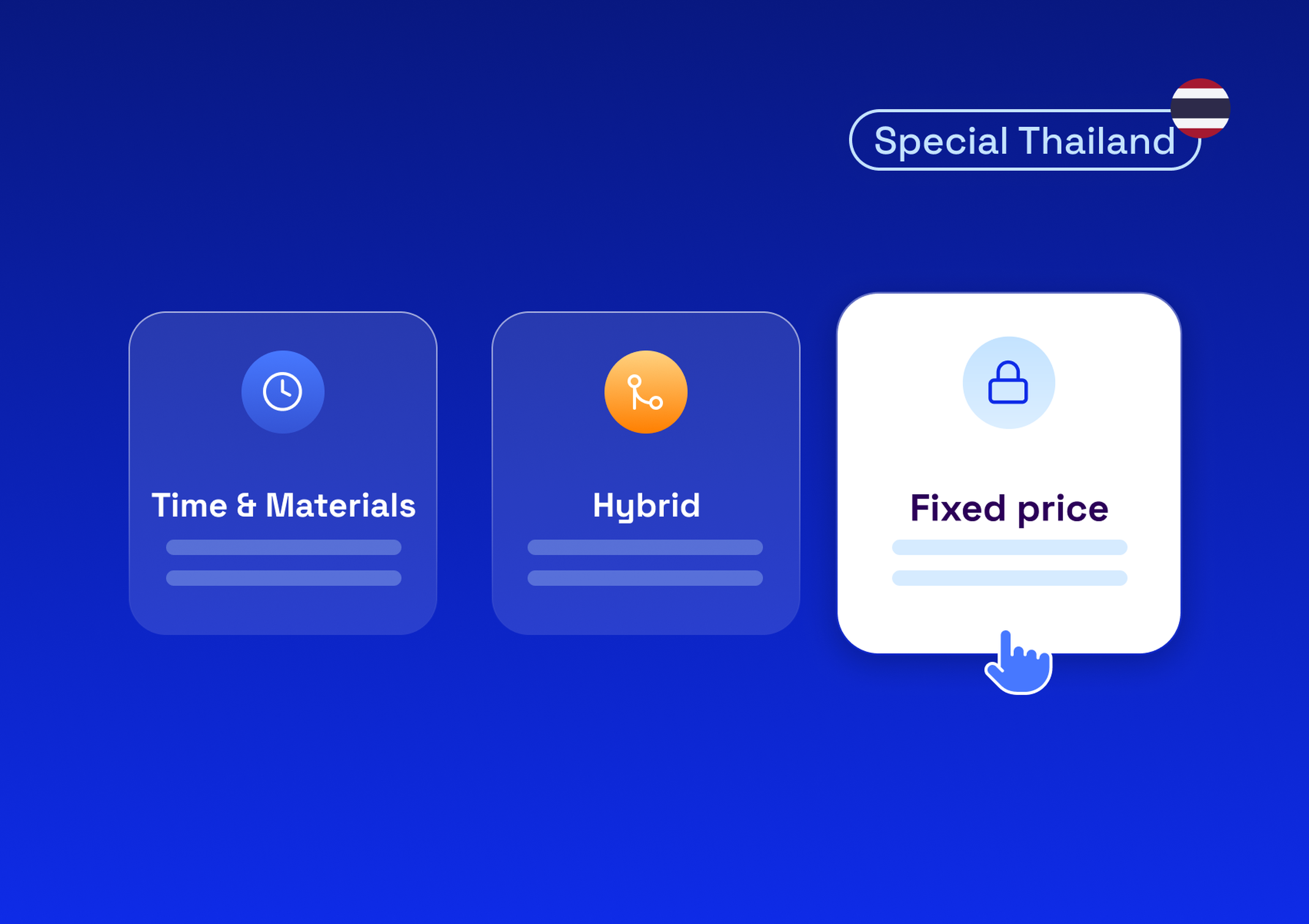
Turnkey projects are usually priced at a fixed price, although the pricing can be milestone-based. The two notions are often confused: fixed price answers the question of how you pay, turnkey answers the question of who is accountable for the result.
What is usually included, and what is often left out
A well-written turnkey contract typically covers requirements analysis, design, development, testing, deployment, documentation and training. Many also include a warranty period during which the provider corrects defects at no extra charge.
Several items are frequently left out or left vague. Data migration from the existing system is a classic case, because it is time-consuming and depends on the quality of data the provider does not control. Integration with other internal systems, performance testing, security testing, user training and ongoing support are others. Third-party licenses and hosting costs may also sit outside the quoted price.
| Item | Frequently included | Frequently outside the price | What to clarify |
|---|---|---|---|
Requirements analysis and design | Yes | Depth of the specification produced | |
Development and unit testing | Yes | Coding standards, code review | |
Data migration | Often | Volume, cleansing responsibility, number of trial runs | |
Integration with internal systems | Partially | Often | Which systems, who provides the interfaces |
Performance and load testing | Often | Measurable thresholds in the acceptance criteria | |
Security testing | Often | Scope of the test, who remediates findings | |
User training | Sometimes | Number of sessions, materials, audience | |
Documentation | Yes | Technical and functional, handover format | |
Third-party licenses and hosting | Often | Who contracts, who pays, in whose name | |
Support after go-live | Often | Warranty period versus paid support |
The practical rule is simple: for each item in this list, ask whether it is inside the price, outside the price or to be decided later. “To be decided later” is where budgets break.
When turnkey makes sense, and when it does not
Turnkey works well when the need is clear and the work is self-contained: a defined application, a platform rollout with a stable specification, an infrastructure setup with documented requirements. It also suits organizations that do not have the internal capacity to manage a build, or that want one party accountable to the board.
It fits less well when the requirements are still evolving, when the project must integrate deeply with legacy systems no one fully understands, or when the knowledge produced by the project is strategic and should stay inside your teams. In these cases, a dedicated team, a Time & Materials contract or a discovery phase before turnkey is usually safer.
The main risks of a turnkey project
The first risk is dependence on the provider. When one firm designs, builds and documents the system, its knowledge is concentrated in that firm. Changing provider later, or taking maintenance in-house, becomes expensive.
The second is scope ambiguity. Turnkey does not mean “everything is included”. If the specification is vague, the provider will deliver what was written and charge for the rest. The third is weak visibility during the project. Since the provider is responsible for the result, clients tend to step back, and discover problems at acceptance, when they are most costly to fix.
The fourth risk is the handover. Source code, documentation, credentials, environments and the knowledge to run the system should transfer to you in a form your teams can use. Many disputes at the end of a turnkey project are really disputes about handover.
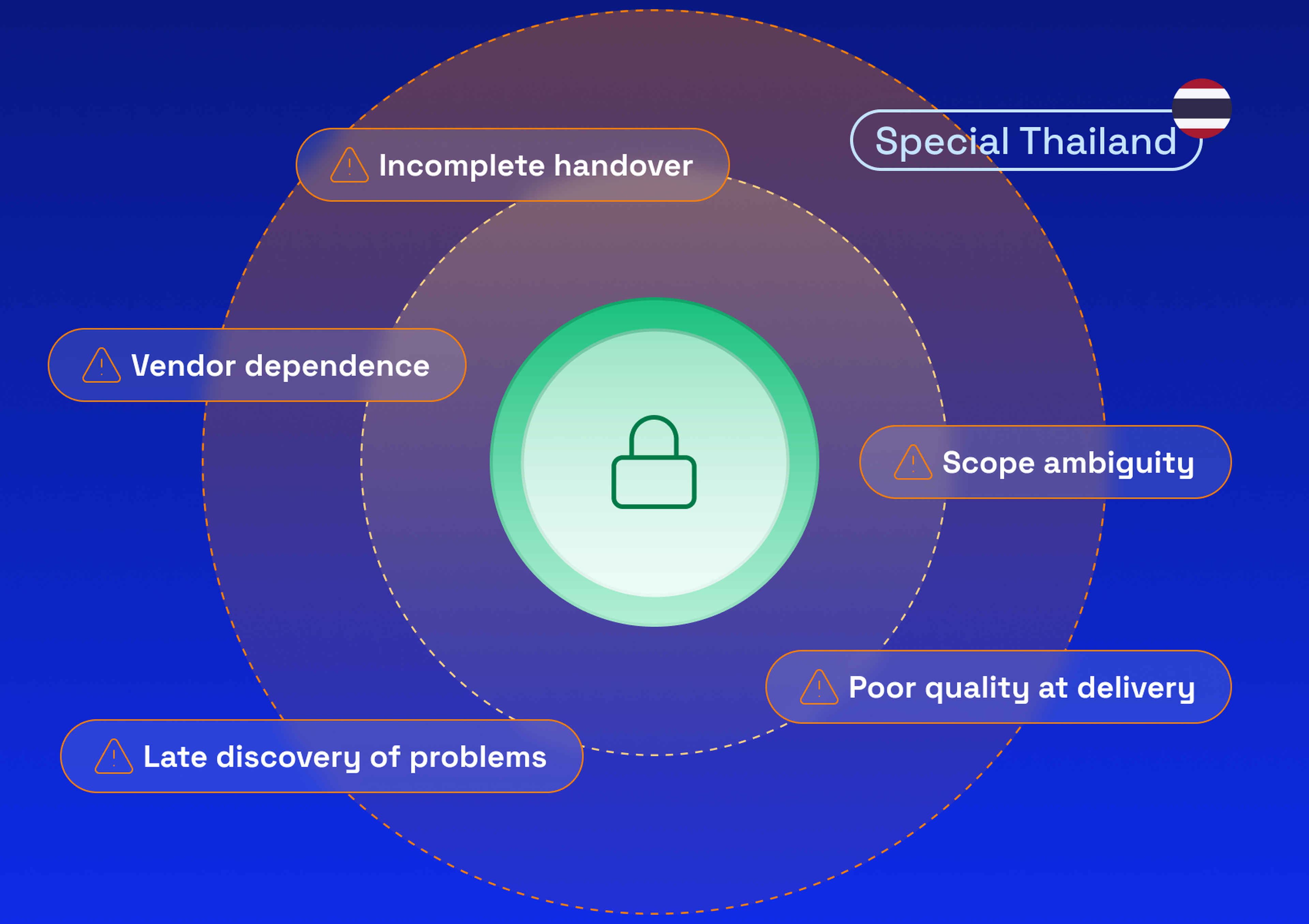
A risk matrix for turnkey projects
The matrix below helps procurement and IT leaders rank risks and decide which controls to write into the contract.
| Risk | Likelihood | Impact | Control to put in the contract |
|---|---|---|---|
Vendor dependence | High | High | Code and documentation delivery, escrow or handover obligations, exit clause |
Scope ambiguity | High | Medium to high | Detailed specification, inclusion and exclusion list, change request procedure |
Late discovery of problems | Medium | High | Milestone reviews, demos, partial acceptance |
Poor quality at delivery | Medium | High | Written acceptance criteria, testing obligations, warranty period |
Incomplete handover | Medium | High | Handover plan, training, documented environments |
Likelihood and impact depend on your context, so adjust the ratings. The point is to match each risk to a control that exists in writing.
Writing acceptance criteria that can be tested
Most turnkey disputes end up in the same place: the provider says the system works, the client says it does not, and the contract says “according to the specification”. An acceptance criterion is useful when it can be verified by someone who was not in the room when it was written.
Three properties make the difference. The criterion names what is measured, not what is intended: response time under a stated load rather than “good performance”. It names the condition of the test: which data set, which environment, how many concurrent users. And it names who decides, with a defined period for the client to run the tests and raise defects, and a rule for what happens when a defect is disputed.
Write a small number of criteria that matter rather than a long list nobody will test. Five verifiable criteria are worth more than thirty aspirational ones.
A short checklist before signing
Before signing, make sure you can answer these five questions with a clause or a document, not with a verbal assurance.
• What exactly is included, and what is excluded, in the price?
• How will you verify progress before the final delivery?
• What are the acceptance criteria and who decides if they are met?
• What do you receive at handover, in what format and by when?
• What happens if you want to end the relationship or change provider?
If any answer relies on trust alone, the contract is not ready.
The following example is composite and does not describe a real client.
A company contracts a turnkey customer portal. The contract states a fixed price and a delivery date, but acceptance criteria are described as “a working portal according to the specification”. Two months before the deadline, the provider demonstrates a version that technically works but is slow under load and lacks the promised reporting. Because performance was never defined, the provider considers the work complete. A short list of measurable acceptance criteria, agreed at signature, would have turned this argument into a simple test.
Handover and exit: the part that is forgotten
The end of a turnkey project is the moment you take ownership of what was built. Plan it from the beginning. The contract should list the deliverables to be handed over: source code, technical and user documentation, environments, access credentials, test cases and training sessions. It should also set a warranty period and describe how support will work afterward.
An exit clause is not a sign of mistrust. It protects both parties by defining how the relationship ends if something goes wrong, and what the provider must hand over in that case. If your project also requires specific senior profiles alongside the turnkey provider, for example an architect or a security expert to review the deliverables, LittleBig Connection can help you source independent experts under a clear contractual framework.
What to remember
A turnkey IT project gives you one accountable party, and in exchange it asks you to be precise about scope, acceptance and handover. It suits clear, self-contained needs and weakens when requirements move. Rank the risks, write the controls into the contract and plan the handover from the first day. A turnkey contract is only as strong as its clauses.
If you are preparing a turnkey project and need experts to support the work, describe your needs to the LittleBig Connection team through the contact page.
The rules that apply can vary depending on the contractual framework, the status of the provider and how the mission is organized. It is best to check these points with the HR, procurement or legal teams concerned.